
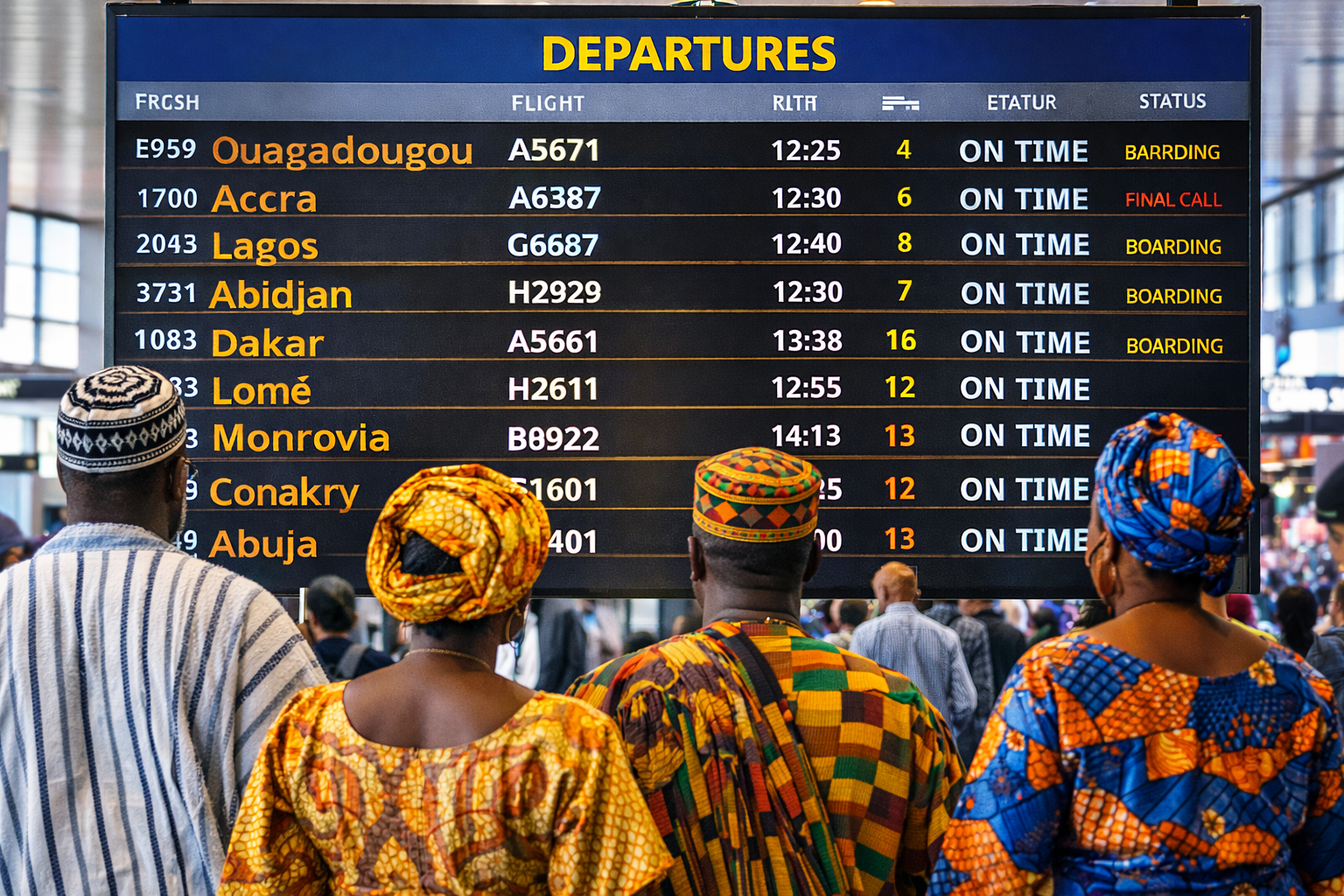
A strategic shift that could improve affordability, mobility, and economic integration across the region — and provide a blueprint for the rest of Africa.
The Economic Community of West African States (ECOWAS) has announced a landmark aviation reform that will abolish key air ticket taxes and reduce aviation charges across member states, in a move expected to lower ticket prices and improve regional connectivity. The reforms were scheduled to take effect from 1 January 2026, and the implementation date has now passed—shifting attention to how consistently member states have applied the changes in practice and whether savings are being passed on to travellers.
Tackling the High Cost of Air Travel
For years, studies and industry reports have consistently highlighted that West Africa remains one of the most expensive regions in Africa to fly within, with government taxes and charges forming a significant portion of ticket costs. These costs have contributed to low passenger volumes, weak regional connectivity, and reduced competitiveness for tourism and trade.
ECOWAS moved to address these structural barriers by adopting a Supplementary Act on Aviation Charges, Taxes and Fees, approved by Heads of State and Government. Under this framework, member states committed to abolish four air transport-related taxes and reduce two major charges (passenger and security charges) by 25%, aligning with international best practice principles around transparency, fairness, and cost-relatedness.
What This Means for Ticket Prices
A key reason these reforms matter is the scale of government costs embedded in regional fares. Reports referenced in the ECOWAS policy discussions indicate that taxes and charges can account for as much as 64–70% of total ticket prices in West Africa, making regional air travel unaffordable for many travellers and businesses.
Now that the implementation date has passed, the focus turns to real-world outcomes: whether the removal of multiple taxes and the reduction of passenger and security charges have translated into measurable fare relief across the region.
While fare impacts will vary by route and country, the direction remains clear:
- On routes where taxes and charges make up a major share of the fare, travellers can reasonably expect double-digit reductions where reforms have been fully applied.
- Even partial reductions in government charges can make the difference between regional travel remaining a premium service and becoming a viable option for everyday commerce, tourism, and family travel.
Expected Impact on Regional Mobility
By removing and reducing specific charges that inflate ticket prices, ECOWAS’ reforms were designed to unlock new demand across regional routes and support stronger intra-regional connectivity. If implemented consistently, the changes should support:
- increased passenger traffic
- improved route viability and frequency
- stronger competition across regional markets
- better access for SMEs, traders, and business travellers
However, the success of the initiative ultimately depends on whether governments, regulators, and airlines work together to ensure cost savings reach the market—rather than being absorbed elsewhere in the aviation value chain.
Beyond Airfares — Driving Economic Integration
This reform is about more than reducing ticket prices. Affordable air travel is a strategic enabler of economic development and regional integration. With easier movement between ECOWAS states, the region stands to gain through:
- stronger intra-regional trade
- increased tourism flows
- improved access to education and specialised services
- enhanced labour mobility and professional exchange
In many ways, the initiative aligns with the broader continental ambition of improving connectivity under Africa-wide integration efforts.
How the Rest of Africa Can Follow — and Why Southern Africa Should Lead Next
While ECOWAS’ decision focuses on West Africa, its significance extends across the continent. It provides a blueprint for how African states can unlock aviation growth by tackling one of the biggest barriers to air travel: high taxes, fees, and charges that suppress demand and limit route development.
A Case for Southern Africa to Act
Southern Africa has made meaningful progress in aviation development, but many markets still face persistent challenges including high fares on key routes, limited intra-regional flight options, and uneven connectivity between capitals and secondary cities. A similar approach to ECOWAS—focused on rationalising and reducing passenger charges—could help countries such as Namibia, South Africa, Zimbabwe, Zambia, and Botswana strengthen regional mobility and stimulate travel demand.
Reducing cost burdens could enable airlines to operate more sustainably on regional routes, expand frequencies, and open new connections that are currently marginal due to low passenger volumes.
The Continental Benefits of Following ECOWAS
If other regional blocs and national governments implement comparable reforms, Africa could unlock significant continent-wide benefits, including:
- Lower fares and higher passenger volumes: Reducing government-imposed costs makes flying accessible to more travellers and businesses.
- Improved intra-African connectivity: Affordable regional travel supports integration, commerce, and movement of people.
- Tourism growth: Cheaper air travel strengthens regional tourism circuits and improves destination competitiveness.
- More sustainable airlines: Higher passenger volumes and better route economics improve airline viability.
- Jobs and investment: Aviation growth supports airports, handling, training, maintenance, and supply chains across the economy.
From Regional Reform to Continental Momentum
ECOWAS has demonstrated that aviation policy reform can be used as a practical lever for development—supporting affordability, competitiveness, and connectivity in one coordinated effort. If other African regions follow this model, the outcome could be transformative: a continent where flying becomes more accessible, regional routes become more viable, and aviation becomes a stronger engine of trade and integration.
ECOWAS has set the pace. The opportunity now is for the rest of Africa—especially Southern Africa—to follow and accelerate a continent-wide shift toward more affordable and connected air travel.
No responses yet