
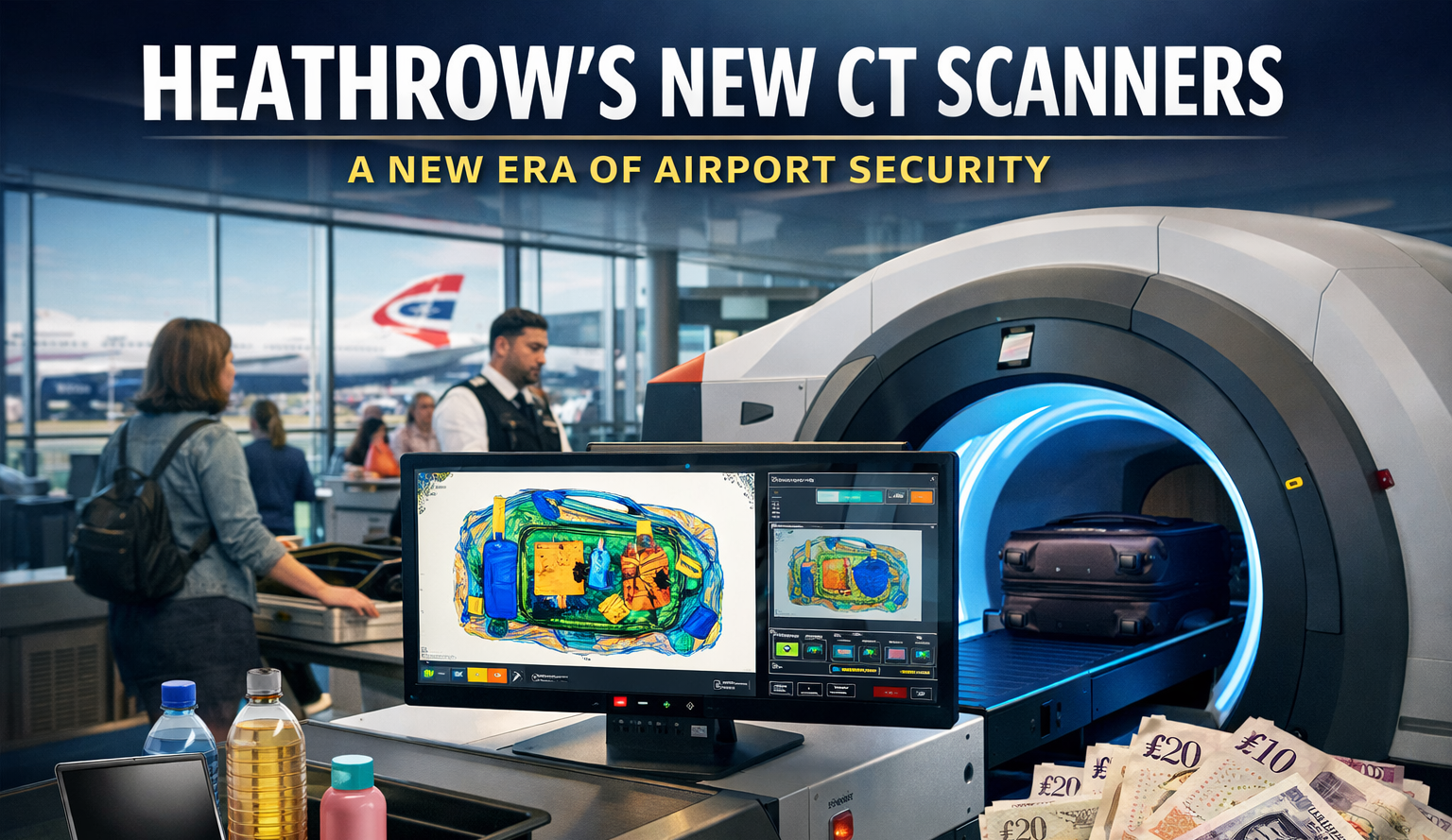
Heathrow’s New CT Security Scanners: A New Era for Airport Screening
Heathrow Airport has become the world’s largest airport to fully implement next-generation CT (Computed Tomography) security scanners across all its terminals, marking one of the most significant changes to passenger screening in decades.
As of the 26th of January 2020, travellers passing through Heathrow no longer need to remove liquids or laptops from their hand luggage. Containers of up to two litres can now remain inside bags, bringing an end to a rule that has shaped airport security since 2006.
According to Heathrow’s Chief Executive, Thomas Woldbye, the upgrade is designed to make security faster, simpler, and less stressful—giving passengers more time to enjoy their journey.
What Prompted the Need for a New System?
The traditional security screening process, introduced after heightened global security concerns in the mid-2000s, required passengers to separate liquids, electronics, and other items. While effective, this system created:
- Long queues during peak travel periods
- High levels of passenger frustration
- Bottlenecks at security checkpoints
- Significant waste from single-use plastic liquid bags
As passenger numbers continued to grow, especially at major hubs like Heathrow, the existing system became increasingly inefficient. Delays caused by the COVID-19 pandemic and global supply chain disruptions further postponed much-needed upgrades.
The result was a clear need for a more advanced, scalable, and passenger-friendly screening solution.
Key Features of the New CT Scanner System
The new security scanners use advanced computed tomography technology to produce high-resolution, three-dimensional images of baggage contents. This allows security staff to analyse items in far greater detail without requiring passengers to unpack.
Key features include:
- 3D imaging of hand luggage
- Automated threat detection
- Ability to scan larger liquid containers (up to 2 litres)
- No need to remove laptops, tablets, or toiletries
- Faster image processing for security officers
These features combine to create a more seamless and modern security experience.
Benefits of the New System
1. Faster and Smoother Passenger Flow
With fewer items needing to be removed, passengers move through security more quickly. Heathrow expects shorter queues, especially during busy travel seasons.
2. Improved Passenger Experience
The new system reduces stress and confusion at checkpoints. Travellers spend less time repacking bags and more time focusing on their journey.
3. Enhanced Security Standards
The 3D imaging technology gives security personnel clearer views of bag contents, improving detection accuracy and overall safety.
4. Environmental Benefits
Heathrow estimates the system will eliminate around 16 million single-use plastic bags every year, supporting sustainability efforts and reducing waste.
5. Future-Proofing Airport Operations
The technology positions Heathrow to handle growing passenger volumes more efficiently, ensuring long-term operational resilience.
Potential Drawbacks and Challenges
While the new system brings major improvements, there are some potential downsides:
High Installation and Maintenance Costs
CT scanners are significantly more expensive than traditional X-ray machines, both to purchase and maintain.
Training Requirements
Security staff require specialised training to interpret 3D images effectively, which adds to operational costs.
Transition Period Issues
During rollout phases, airports may experience temporary disruptions as old systems are replaced and staff adapt to new procedures.
Uneven Global Adoption
Not all airports worldwide have implemented similar systems yet. Passengers may still face different rules at other airports, leading to confusion.
Cost Implications for Airports
Heathrow’s upgrade reportedly cost around £1 billion, reflecting:
- Equipment procurement
- Infrastructure upgrades
- Software systems
- Staff training
- Ongoing maintenance
For airports, especially large hubs, adopting CT scanners represents a major capital investment. Smaller regional airports may find it harder to fund similar upgrades without government support or increased revenues.
How Costs May Trickle Down to Airlines and Passengers
Impact on Airlines
Airports often recover major infrastructure investments through higher operational fees charged to airlines. These may include:
- Increased landing fees
- Higher terminal usage charges
- Security levies
Over time, airlines may factor these costs into their operating budgets.
Impact on Passengers
Airlines commonly pass increased airport charges on to passengers through:
- Higher ticket prices
- Increased airport taxes and surcharges
- Additional service fees
While the individual cost per passenger may be small, it can accumulate across large volumes of travellers.
However, improved efficiency may also help airlines save money through reduced delays and better turnaround times, potentially offsetting some cost increases.
A Generational Shift in Airport Security
For passengers, Heathrow’s full rollout represents the biggest shift in airport security screening in a generation. By combining advanced technology, environmental responsibility, and customer-focused design, the new system sets a benchmark for major global airports.
Although the financial investment is substantial, the long-term benefits—faster processing, better security, improved passenger satisfaction, and reduced waste—position Heathrow as a leader in modern airport operations.
As more airports worldwide follow suit, travellers can expect a future where security is not only safer, but also simpler, smarter, and more sustainable.
No responses yet